European Pond turtle study results
Biomediterrània and Menorca Preservation present the first results of a pioneering initiative to study the European pond turtle using drones
The events held at the Menorcan Institute of Studies (IME) and Cala Tirant have provided an opportunity to share the project’s first findings and showcase the potential of new technologies applied to conservation
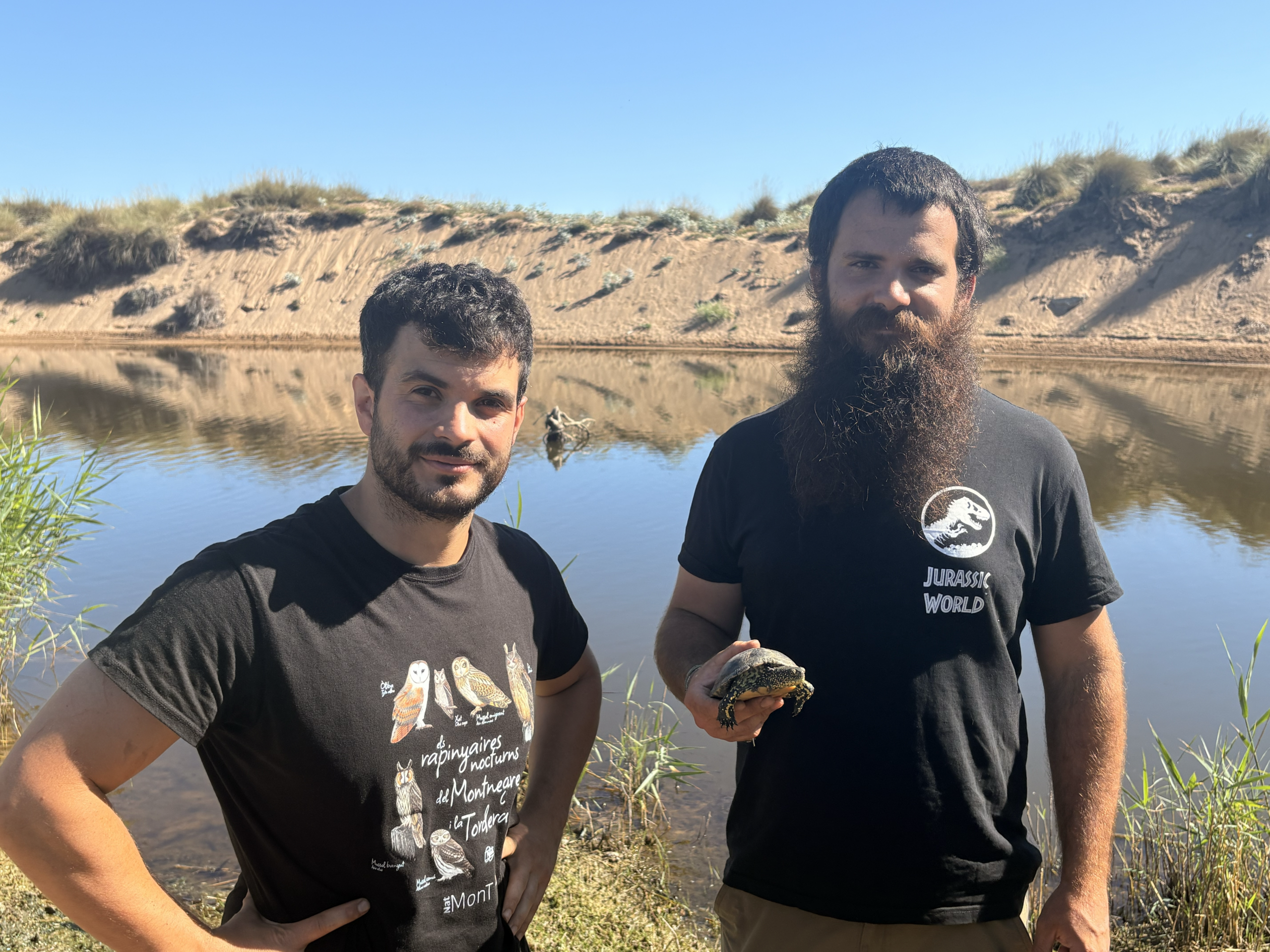
Menorca Preservation and the association Biomediterrània held a series of events this weekend to present the first results of a project monitoring the European pond turtle (Emys orbicularis) using drones. This pioneering initiative, the first of its kind in Spain, has been developed in Menorca to explore new tools for studying and conserving this protected species and the wetlands it inhabits.
The events, held on 12 and 13 June, combined an educational session at the headquarters of the Menorcan Institute of Studies (IME) with a practical field activity in Cala Tirant, with the aim of introducing different audiences to the potential of new technologies applied to conservation.
The first session focused on the project’s technical dimension, presenting the methodology used and some of the preliminary results obtained so far. The following day, during the field session organised in Cala Tirant, participants had the opportunity to see the drone in operation and learn first-hand how European pond turtle monitoring is carried out in Menorca.
The events also provided a space for discussion and reflection on the role that new technologies can play in the conservation of vulnerable species and ecosystems. Attendees discussed the advantages and limitations of these methodologies, how they can complement traditional monitoring techniques, and the role they may play across different taxonomic groups (for example, birds or reptiles), habitats (terrestrial and aquatic), and sensitive periods of the year such as nesting or migration seasons. Turtles are particularly well suited to drone-based monitoring: although they are elusive by nature, they regularly emerge to bask in the sun, making them relatively easy to detect through aerial surveys.
Nearly 600 European pond turtles recorded across nine wetlands in Menorca
During monitoring work carried out over four field campaigns, the team recorded nearly 600 European pond turtles across nine wetlands in Menorca, covering an area of approximately 42 hectares and studying some of the island’s main populations of the species.
This work has enabled the testing of a methodology that remains relatively uncommon in the monitoring of aquatic wildlife, particularly freshwater turtles, while exploring the potential of drones as a complementary conservation tool.
The project was developed with three main objectives: to assess the effectiveness of drone-based monitoring of aquatic turtles, to compare it with traditional monitoring methods, and to contribute directly to species conservation through the analysis of ecological requirements and the development of restoration strategies tailored to each population.
In addition to recording the presence of individuals, the team carried out a detailed assessment of how turtles use wetlands and of the key characteristics of both aquatic and terrestrial habitats.
Preliminary results indicate that drones could become a highly valuable tool for complementing traditional monitoring methods, particularly in hard-to-access areas or in situations where available resources limit the use of other survey techniques.
Initial analyses also suggest that observing the species from an aerial perspective may provide new insights into its behaviour and its response to different threats. In some cases, traditional monitoring methods appeared to indicate population declines, whereas drone monitoring suggests that, although these changes may be real, they could instead reflect shifts in the species’ behaviour.
“Traditional turtle monitoring through capture techniques allows us to gain a thorough understanding of overall population trends, but certain aspects of behaviour, habitat use, or even individuals that are particularly difficult to capture can be very challenging to detect. Although still preliminary, the work carried out provides a solid foundation demonstrating the significant value of drones for monitoring aquatic wildlife,” explains Santiago Poch, Field Technician and Data Analyst at Biomediterrània.
Rebecca Morris, Director of Menorca Preservation, adds: “At Menorca Preservation, we believe it is extremely important to support projects such as this one, as they enable scientific teams to explore new tools, test innovative methodologies and generate knowledge that can have a very real impact on conservation. In this sense, helping to promote more efficient and accessible research can contribute to optimising resources and allow those working in the field to focus their efforts even more effectively on understanding and protecting our ecosystems.”
Why is it important to protect the European pond turtle?
The European pond turtle is a small freshwater turtle classified as a Species of Special Protection in the Balearic Islands under Decree 75/2005. It has recently been listed as Vulnerable in Spain under the Spanish Catalogue of Threatened Species and is protected under European legislation through its inclusion in the Habitats Directive and the Bern Convention.
Although its population within the Menorca Biosphere Reserve is considered to be in good condition, it still faces a number of threats, including habitat loss, invasive species, overexploitation of freshwater resources and human pressure.
The species is also an important bioindicator: its presence reflects the good ecological health of wetlands. Because it depends on well-preserved habitats to survive, protecting the species also benefits many other forms of wildlife.
The importance of ensuring healthy wetlands
Wetlands, including streams, ponds and lagoons, are among the most threatened ecosystems worldwide. They provide a vast range of ecosystem services for people, including freshwater supply and acting as climate refuges. However, their value and the reasons for protecting them extend far beyond this, as they form part of a landscape and way of life to which human societies have adapted over thousands of years.
As wetlands continue to degrade and disappear, the species that depend on them are experiencing severe declines and, in some cases, local extinction. For this reason, conservation and restoration actions are becoming increasingly urgent. These efforts depend on having a clear understanding of the needs of species and habitats, as well as the status of the populations that occupy them — a task that is often both physically and financially demanding.